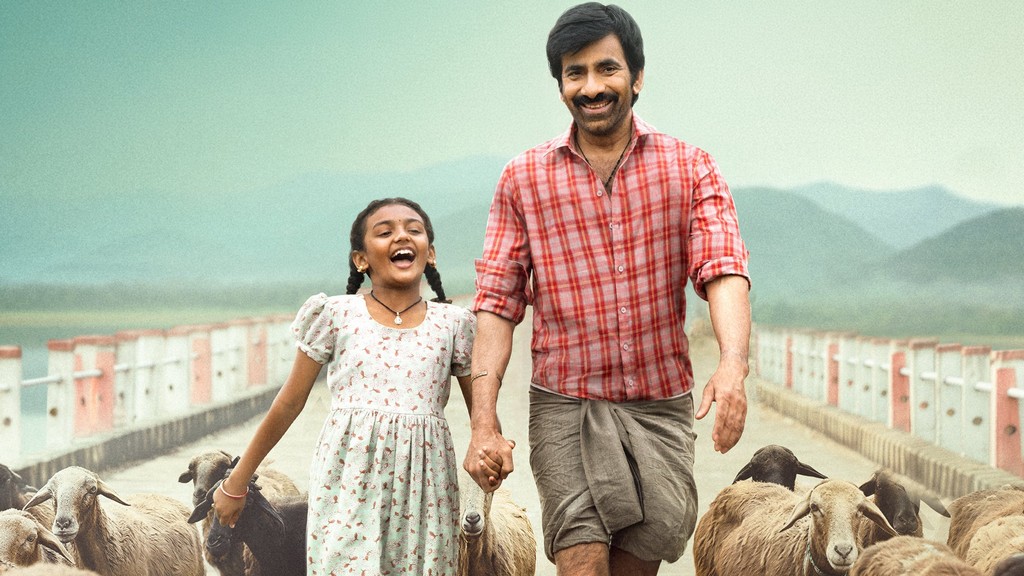
Irumudi, the 2026 Telugu action-drama written and directed by Shiva Nirvana and produced by Mythri Movie Makers, marks a refreshing shift for Ravi Teja as he steps away from high-octane mass roles into a more restrained, performance-driven space.
Released on August 21, the film runs roughly two and a half hours and centres on Trinadh, a banana farmer and small-time trader in the rural Andhra village of Polluru who battles alcoholism and a violent past while living a simple life devoted to his young daughter Manikanta. At her earnest request he undertakes the strict 41-day Ayyappa Deeksha, committing to abstinence and self-reform, only for this personal journey of redemption to collide with a darker crisis threatening the safety of the village’s schoolgirls. Without relying on pure pilgrimage spectacle, the story uses the deeksha as both spiritual backbone and narrative spine while exploring contrasting parenting philosophies—one that encourages daughters to speak up freely and another that arms them with fear—and ultimately delivers a socially conscious meditation on girl-child protection and empowerment.
Ravi Teja delivers one of his most sincere and controlled performances in years, shedding the familiar energetic mannerisms to portray a broken yet fiercely protective father whose quiet intensity and emotional honesty carry the film. His chemistry with child actor Baby Nakshathra feels genuine and lived-in; she, in turn, is outstanding as the daughter, bringing natural maturity, warmth and vulnerability that make her the emotional heart of the story. Priya Bhavani Shankar offers steady support as the wife, while Sai Kumar is effective as a contrasting father figure, and the remaining ensemble fills its roles adequately even if some antagonistic characters remain more functional than fully fleshed out.
Shiva Nirvana keeps the screenplay largely focused on the core relationship and social theme, resisting the temptation to insert unnecessary commercial detours, which gives the film an honest, grounded quality. The first half takes its time establishing village life, the father-daughter bond and underlying tension, and some viewers may find the pacing deliberate or slow; the second half gathers intensity, emotional weight and thriller elements, culminating in a climax many have described as moving and impactful. GV Prakash Kumar’s music and background score effectively underscore the rustic, devotional and tense atmosphere, while Vishnu Sarma’s cinematography captures the scenic rural locales with quiet competence that serves the narrative rather than overwhelming it.
The film’s greatest strengths lie in that authentic father-daughter emotion, Ravi Teja’s committed turn, and a relevant message about listening to and empowering young girls. Its weaknesses surface in the uneven pacing, occasional predictability of the antagonistic threads, a few logical gaps, and emotional beats that do not always land with consistent force. Still, Irumudi remains a solid and sincere emotional drama that works best as a performance-led family story layered with social consciousness.
Audiences responding more warmly to the heartfelt core and Ravi Teja’s return to form. It is worth watching in theatres if you appreciate grounded emotional storytelling, father-daughter narratives, or simply want to see the actor in a more introspective light.

